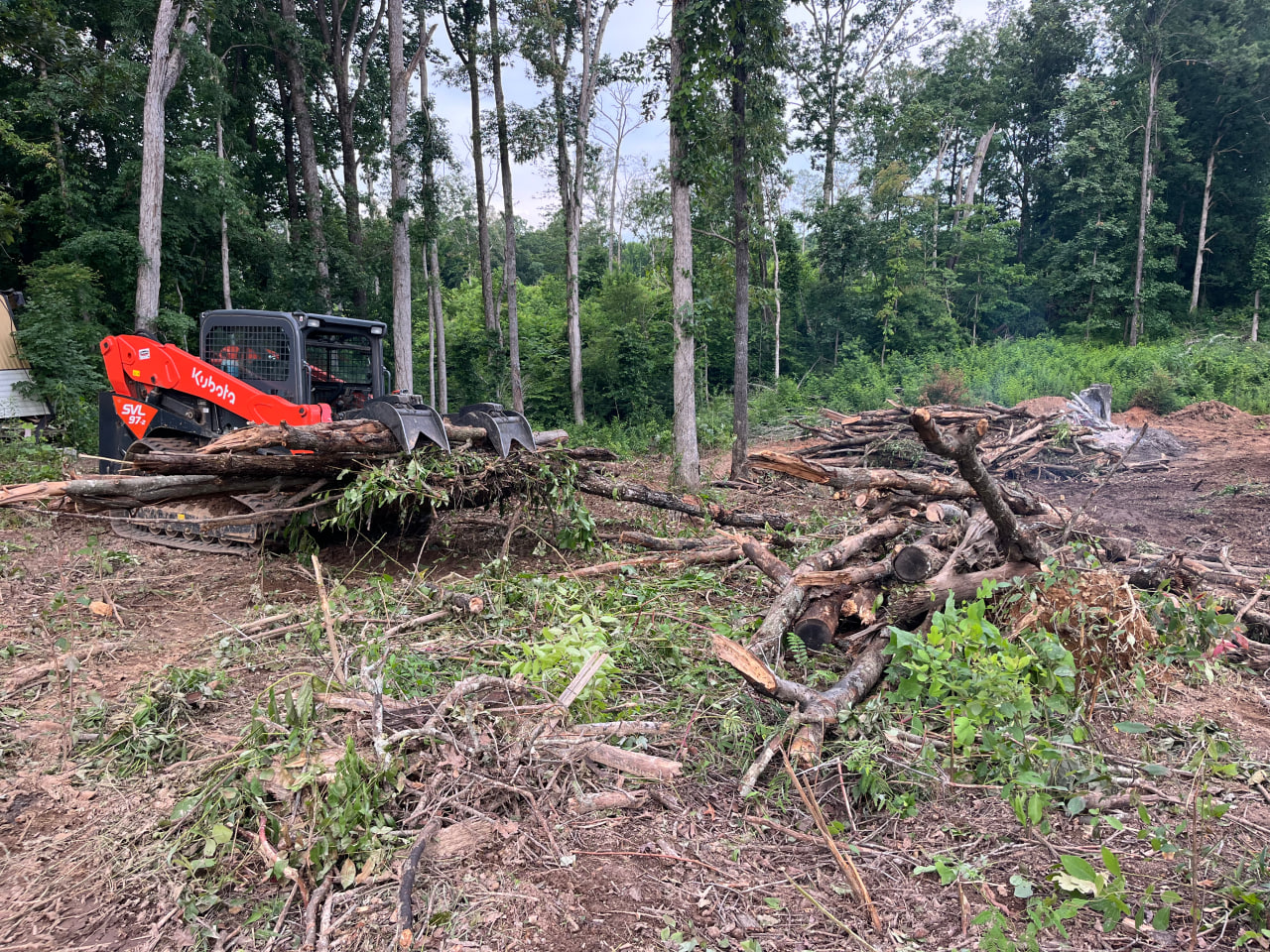
Land Clearing vs. Forestry Mulching in Southern Tennessee: Which Is Right for Your Property?
If your Southern Tennessee property is covered with unwanted brush, trees, or overgrowth, you've probably encountered two common solutions: land clearing and forestry mulching.
They may sound similar, but they aren't necessarily the same approach.
Understanding the difference can help you make a better decision about your property.
At JJ’s Excavating LLC, we provide both professional land clearing and forestry mulching throughout Southern Tennessee. The right approach depends on the condition of your property and, more importantly, what you want to accomplish afterward.
Let's break down the differences.
What Is Land Clearing?
Land clearing generally involves removing unwanted vegetation and other obstructions from an area so the property can be used for another purpose.
The amount of clearing can vary significantly.
Some projects involve opening a selected section of acreage, while others may involve preparing a larger area for future use.
Property owners may consider land clearing when preparing for:
Property improvements
Agricultural use
Improved access
Future construction
Site preparation
Reclaiming overgrown acreage
Other land development projects
Land clearing is often only one phase of a larger project.
After vegetation is addressed, the property may require grading, excavation, drainage work, or additional site preparation depending on its intended use.
What Is Forestry Mulching?
Forestry mulching is another method of managing unwanted vegetation.
Specialized equipment processes vegetation and leaves the resulting mulch on the property.
This can make forestry mulching an attractive option when the primary objective is controlling brush and vegetation rather than completely preparing the site for another type of work.
JJ’s Excavating LLC provides forestry mulching throughout Southern Tennessee for properties where this approach fits the vegetation and land-management goals.
When Does Traditional Land Clearing Make Sense?
Land clearing may make sense when the vegetation is standing in the way of a larger plan.
For example, you may want to reclaim an area for another property use or begin preparing a site for additional improvements.
The key is thinking beyond the clearing itself.
Ask yourself:
What needs to happen on this ground after the vegetation is gone?
If additional excavation or property preparation is expected, a broader land clearing approach may fit naturally into the project.
When Does Forestry Mulching Make Sense?
Forestry mulching can be useful when brush and unwanted vegetation are the primary concern.
For example, a property owner may want to manage an overgrown section of acreage or reclaim an area without immediately moving into a major construction project.
The mulch produced during the process remains on site, which distinguishes forestry mulching from clearing approaches that involve removing vegetation differently.
Whether it makes sense for your property depends on the vegetation and your desired result.
What About Heavily Overgrown Rural Acreage?
Southern Tennessee has plenty of rural properties where vegetation can gradually take over sections of usable land.
If you're dealing with larger acreage, don't assume the entire property needs the same treatment.
Some areas might benefit from forestry mulching, while another portion may require more extensive clearing because of its intended future use.
This is one reason evaluating the property as a whole is important.
The objective isn't to clear the maximum amount of land.
It's to create the right result for how you intend to use it.
Consider What Comes After Clearing
This is one of the most important parts of choosing between land clearing and forestry mulching.
Imagine two property owners.
The first wants to manage brush on rural acreage and make the area easier to maintain.
The second wants to clear an area as part of preparing the property for a future improvement.
Both properties may look similarly overgrown today, but their desired outcomes are different.
That difference can affect the appropriate approach.
If additional groundwork is planned, services such as grading and site preparation may become important once clearing is complete.
Terrain and Accessibility Matter Too
The vegetation isn't the only thing that affects a land clearing project.
Terrain, ground conditions, and equipment access also matter.
A flat, easily accessible area presents different conditions from sloped or difficult-to-reach acreage.
That's why choosing a clearing method based solely on pictures or acreage can be misleading.
A professional assessment allows the contractor to consider the actual conditions of the property.
Do You Have to Choose Only One Method?
Not necessarily.
Different portions of a property can have different goals.
For example, one area might require more extensive clearing, while another could benefit from forestry mulching.
The best approach should be based on what you're trying to achieve rather than forcing the entire property into one solution.
Work With a Southern Tennessee Land Clearing Contractor
Whether you need traditional land clearing, forestry mulching, or additional groundwork, working with a contractor that offers multiple land services can simplify your project.
JJ’s Excavating LLC provides land clearing in Southern Tennessee along with forestry mulching, grading, site preparation, excavation, drainage solutions, and other property services.
We serve homeowners, farmers, businesses, and landowners throughout communities such as Elora, Huntland, Flintville, Kelso, Belvidere, Winchester, Fayetteville, Mulberry, Lynchburg, Decherd, and surrounding areas.
Not Sure Which Clearing Method Your Property Needs?
You don't have to make the decision alone.
Tell JJ’s Excavating LLC what your property looks like today and what you want it to look like afterward.
We'll help you determine an appropriate way to move forward with your Southern Tennessee land clearing or forestry mulching project.


